Aion 2 Review: Is It Worth Playing? Combat, Endgame, and Pay-to-Win Explained
Aion 2 is worth trying if you enjoy repeatable group PvE, long-term character growth, and exploration that makes your character stronger. Its biggest compromises are equally clear: paid progression advantages, substantial upgrade randomness, and a macro system that can outperform manual damage rotations.
The closest comparison is Lost Ark with less emphasis on maintaining a large roster and less mechanically demanding encounters. That does not make Aion 2 effortless. Bosses attack quickly, mistakes hurt, and progression can involve plenty of repeated dungeon runs.
This review evaluates the Taiwan version and the announced Western launch plans. Regional pricing, progression limits, balance, and available content may differ. The announced schedule lists September 30 for Founder’s Pack access and October 5 for global early access.
Key Takeaways
- Aion 2 emphasizes repeatable group PvE and main-character progression rather than maintaining a large roster.
- Paid currency exchange accelerates progression, while the subscription provides important market access and convenience.
- Built-in macros simplify routine damage execution but leave movement, defenses, and encounter mechanics under player control.
- Exploration provides substantial early power, but dungeon farming becomes the central endgame activity.
The Verdict: Who Should Play Aion 2?
Aion 2 works best as a progression-focused MMORPG built around a primary character. It offers an appealing combination of impressive environments, cinematic dungeons, collectible-driven upgrades, and frequent opportunities to increase your power.
Its strengths do not erase its trade-offs. If buying progression advantages is unacceptable to you, or if mastering a manual rotation is your favorite part of MMO combat, those are fundamental concerns rather than minor inconveniences.
| What you want from an MMO | How well Aion 2 fits |
|---|---|
| Dungeon farming with friends | A strong fit, provided you enjoy repeating encounters for upgrades. |
| One main character rather than a large roster | A better fit than heavily alt-dependent progression games, although alts still help. |
| Exploration with meaningful rewards | Strong during early progression, less central after collections are finished. |
| Highly technical raid mechanics | Less suitable than Lost Ark, World of Warcraft Mythic raids, or Final Fantasy XIV Ultimates. |
| Balanced competitive PvP | A weak fit overall because gear, power scaling, and spending affect competition. |
| Cosmetic-only monetization | Not a fit. Real-money spending can accelerate progression. |
The distinction is between an accessible progression MMO and an MMO without grind or spending pressure. Aion 2 is closer to the former, not the latter.
Is Aion 2 Pay to Win, and What Does It Cost?
Yes, Aion 2 is pay to win if your definition includes spending real money to progress faster. Its currency exchange creates a route from real-money purchases to in-game buying power. Progression materials do not need to appear as direct cash-shop bundles for spending to provide an advantage.
That matters especially in a game where character power can scale dramatically. Paying players can accelerate purchases and upgrades, while players who do not spend beyond a subscription can still progress through gameplay.
The subscription is the practical baseline
The base subscription is approximately $15 per month in the version assessed. Treat that as a reference rather than confirmed Western pricing.
Playing without a subscription lets you reach maximum level and sample some dungeons. For sustained play, however, the subscription provides important conveniences:
- Market access, which matters for a progression system tied to buying and selling.
- Remote storage, reducing inventory-management friction.
- Double-energy dungeon spending, allowing you to consume the same amount of energy in fewer clears.
The last benefit is particularly relevant to time commitment. Running fewer dungeons to spend the same energy can make the routine substantially more manageable.
Can in-game currency cover purchases?
The exchange also works in the other direction: earned in-game currency can be converted into cash-shop currency for eligible purchases, including battle passes. However, the subscription and skins in the assessed version require direct real-money purchases rather than that exchanged currency.
Being able to earn some shop purchases does not make the entire payment model free. It is important to separate optional spending, subscription costs, and progression acceleration.
Will Western launch restrictions reduce spending advantages?
The announced Western plans include a lower initial progression ceiling than the more advanced regional versions. A restricted ceiling may reduce how far heavy spenders can pull ahead early on, but it does not remove spending advantages within the available systems.
Crafted weapons and accessories remain relevant examples of progression where buying power can matter. The sensible expectation is a potentially more constrained launch, not an equalized economy.
What You Actually Do in Aion 2
Aion 2 is primarily a PvE MMORPG with PvP alongside it. Its early game spreads progression across the world, while its endgame increasingly concentrates on instanced group content.
Early progression: explore, collect, and build power
Quests and collections are not merely optional diversions. They provide meaningful upgrades through skill points, skill levels, base stats, and damage bonuses.
Your early activities include:
- Completing quests throughout the world.
- Finding feathers and filling collection objectives.
- Farming creatures for pets and mounts.
- Unlocking collectible appearances that can provide power benefits.
- Gathering resources for crafted equipment.
This creates a satisfying stretch of progression for players who enjoy clearing maps and pursuing many small improvements. Much of it can be completed solo, so there is usually something productive to do without assembling a group.
The mount collection is especially extensive, with more than 250 mounts described in the assessed version and a broad range of world creatures available to collect.
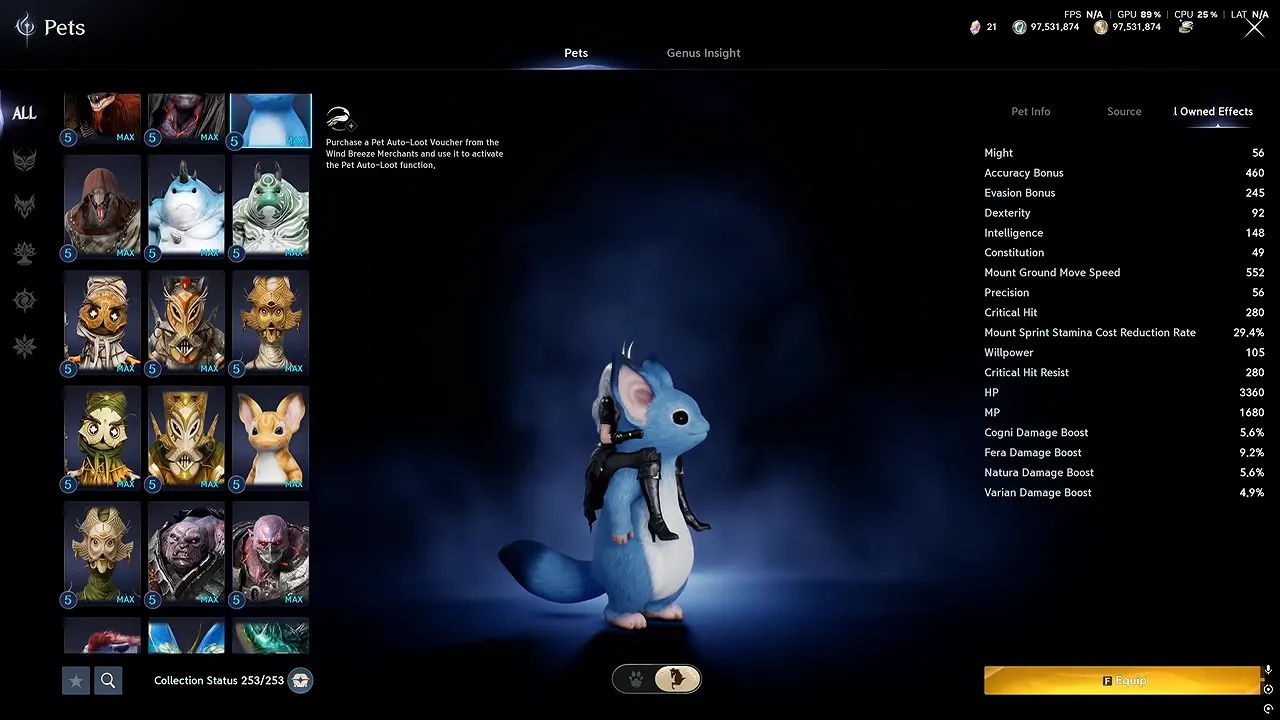
Many collection systems are shared across characters on the same server. That reduces repetition if you create another character, although it does not mean every progression system is shared.
Endgame: repeat PvE content to fund the next upgrade
Once established, a typical session becomes more focused:
- Complete relevant daily duties or weekly objectives.
- Use the party finder for dungeons and raids.
- Spend energy on reward-generating content.
- Put materials and currency toward equipment improvements.
- Use remaining time for gathering, collections, crafting, or the Abyss.
The appeal is straightforward: repeat content, acquire upgrades, and return noticeably stronger. Helping friends through older encounters also becomes part of that progression payoff.
The limitation is repetition. If running familiar dungeons for another power increase sounds like maintenance rather than entertainment, Aion 2’s endgame is unlikely to change that preference.
Does the energy system respect your time?
Many reward-generating dungeon activities use energy. In practice, it functions somewhat like a bankable dungeon allowance rather than a requirement to complete every run immediately.
Missing a day does not necessarily mean losing that day’s opportunity, because energy can be saved for later. The exact flexibility depends on available energy and storage limits, so this should not be mistaken for unlimited banking.
The system helps accommodate uneven schedules, but it can also leave dedicated players with a large backlog of runs. Flexible timing does not eliminate the underlying dungeon workload.
How Good Are the Dungeons and Raids?
Group PvE is Aion 2’s strongest foundation. Dungeons often feel like elaborate environments rather than simple corridors between bosses, with striking scenery and a cinematic sense of scale.
The encounter design emphasizes fast reactions more than elaborate puzzle solving. Attacks arrive quickly, incoming damage is high, and survival requires attention even when the mechanics are relatively straightforward.
Five-player dungeons
Dungeons generally support five-player parties, commonly built around one tank, one healer, and three damage dealers. Some content allows more flexibility, and entering with fewer players is possible.
Higher difficulty options add mechanics. Individual mistakes can sometimes wipe the group, but that pressure is not as pervasive as in Lost Ark’s more demanding encounters.
After the learning phase, many dungeon clears take roughly 10 minutes, depending on the group. In some dungeons, experienced parties can bypass ordinary enemies and move toward the boss.
Traversal is a recurring annoyance. Traps and hazardous routes can kill characters before the encounter, wasting time and potentially active buffs. The attractive environments are not always equally enjoyable to run repeatedly.
Ten-player raids
Raids offer more involved mechanics and important chase items. Many of those items have pity systems, providing a route toward acquisition rather than relying entirely on a lucky drop.
Raids are a mechanical step above ordinary dungeons, but the assessed encounters do not reach the complexity of World of Warcraft Mythic raiding, Final Fantasy XIV Ultimates, or Lost Ark’s tougher raids.
That makes them appealing to players who want coordinated group encounters without the same level of preparation. It also means players seeking a demanding raid-first MMO may find the current offering insufficient.
Solo progression content
Aion 2 also includes solo daily and weekly activities. Nightmare, for example, is a weekly solo boss activity that rewards progression materials, items, and cosmetics.
These activities provide variety, but the game’s main progression and income loop still revolves around dungeons. Solo-friendly activities do not make Aion 2 a predominantly solo endgame.
Combat and Macros: The Most Important Gameplay Compromise
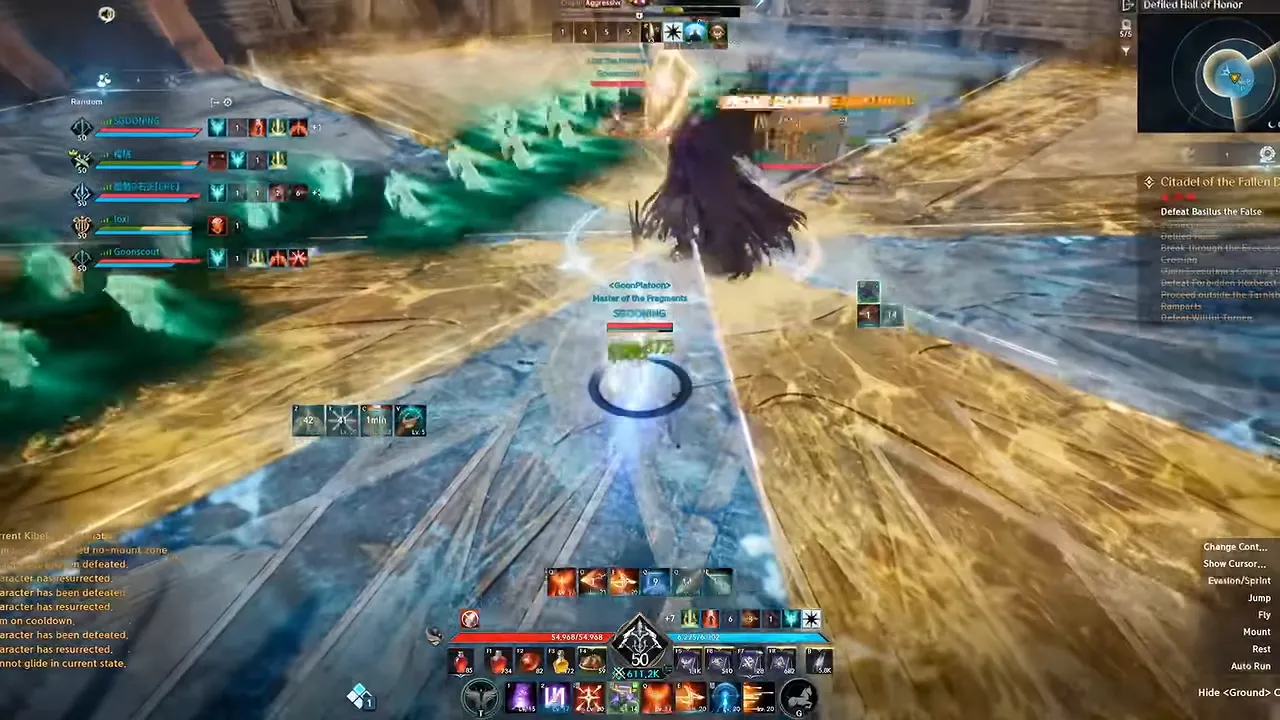
Aion 2 combines action elements with tab targeting. Animations are responsive, and the initial combat can feel satisfying. As equipment improves, however, attack and animation speeds increase substantially.
With effectively no shared global cooldown between skills, advanced combat can become extremely input-heavy. Repeated skill pressing led to fatigue concerns and the use of external peripheral macros, followed by the introduction of an in-game macro system.
How the built-in macro system works
The system combines skill stacking with configured hotkey cycling:
- Place multiple skills on one hotkey. Skills within the stack use a priority order.
- Set the preferred priority. Available skills appear according to cooldowns and that order.
- Assign multiple hotkeys to a macro. Holding the macro key cycles through the configured stacks.
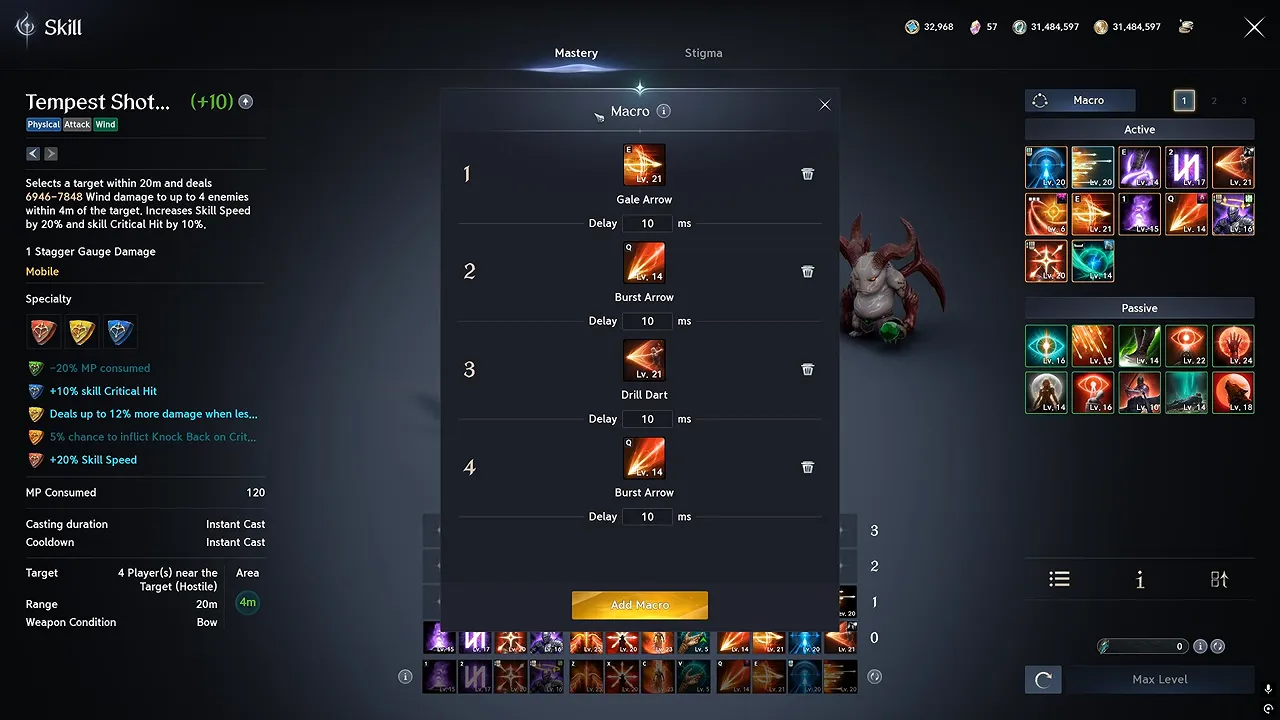
This can automate a substantial portion of routine damage execution. It does not automatically move your character, solve encounter mechanics, or keep you alive.
What remains manual?
Important decisions still include:
- Dodging attack patterns and maintaining position.
- Blocking and parrying.
- Using movement skills.
- Timing defensive and burst cooldowns.
- Applying important debuffs.
- Handling selected damage abilities separately from the macro.
During difficult encounters, these responsibilities can keep combat engaging. The macro reduces repetitive inputs while allowing more attention to go toward survival and mechanics.
The problem is efficiency and class identity
The strongest criticism is not simply that macros exist. It is that macro-assisted damage can be more effective than manual execution, especially during movement-heavy mechanics.
A player handling every damage input manually must divide attention between rotation and survival. A macro reduces that conflict and can maintain more consistent execution as combat speeds increase.
It also makes classes feel more similar. Their roles, visuals, and manually timed abilities still differ, but a large share of routine damage can reduce to holding the same kind of input.
If rotation mastery is central to your enjoyment, test this system before committing. If you primarily enjoy positioning, encounter execution, and progression, the compromise may be much easier to accept.
Classes, Roles, and Whether You Need Alts
The eight classes listed for launch are:
- Templar
- Gladiator
- Ranger
- Sorceress
- Spirit Master
- Assassin
- Cleric
- Chanter
Aion 2 uses the familiar tank, healer, and damage-dealer structure, with some hybrid flexibility. Gladiator can serve as a more aggressive tank option, while Chanter offers a hybrid support approach.
Support characters can still deal damage and progress through solo activities. Choosing a support does not inherently prevent you from completing the game’s solo content.
Choose an archetype, not a temporary ranking
Frequent balance updates make launch tier lists fragile. In the assessed version, every class could complete content and had a place in group play.
Role preference and visual appeal are therefore more useful starting points than chasing a narrow damage lead. For additional context, class performance data can help inform a choice, but it should not be treated as a permanent ranking.
Class-specific resources such as the Ranger build statistics are useful once you have chosen an archetype and want to investigate builds.
Are alternate characters required?
Alts can generate additional resources when your main has exhausted its energy. Dedicated players can also use them to farm early dungeon materials for crafting.
However, a large roster is not as fundamental to progression as it is in Lost Ark or MapleStory. One main, potentially supported by a second character, is a more natural fit for many players.
The distinction is helpful versus foundational. Alts can improve efficiency without being the central organizing principle of the game.
Gearing: RNG, Crafting, and Long-Term Progression
Aion 2 follows an evergreen progression model rather than one built around frequent hard resets. Character investment accumulates over time, although catch-up events can significantly accelerate older progression.
Equipment growth combines random upgrades, direct drops, crafting, and pity systems. Having several routes is a strength because a failed enhancement does not necessarily leave you without another useful objective.
Enhancement and stat rolling
Ordinary equipment enhancement generally does not destroy the item on failure. Clash Runes are an exception to the otherwise reassuring picture of failure consequences.
Enhancement chances discussed for the assessed version were commonly around 10% to 30%, rather than the extremely low rates associated with some other Korean MMOs. That is not a universal rate for every item or upgrade stage.
Other systems involve rerolling stat lines or accessory skill levels, with options to lock desirable results. Some soul-binding outcomes remain particularly unforgiving.
More favorable odds do not remove randomness. Players should still expect unsuccessful attempts and periods when a desired upgrade takes considerable farming.
Guaranteed crafting upgrades
Crafting provides another major progression route. Certain equipment can be upgraded into the next tier with a guaranteed result once the required resources are assembled.
The certainty comes at a cost: substantial gathering and grinding. Crafting and substance-morphing menus can also make the process harder to navigate than it needs to be.
Gathering itself has no stated activity limit in the assessed version, but valuable nodes can be contested by other players and bots.
Why unsuccessful runs can still matter
A dungeon that fails to drop your target item can still provide materials and currency for other upgrades. Direct equipment drops also offer a more tangible reward than receiving only enhancement materials.
A practical way to approach progression is to maintain several objectives:
- A target drop from repeatable content.
- A crafting goal with measurable resource requirements.
- An unfinished collection that grants character power.
- A pity-based objective where available.
This does not eliminate grinding, but it helps prevent one unlucky system from becoming your only measure of progress.
PvP and the Abyss: Optional Fun With Progression Incentives
Aion 2’s PvP is easier to recommend as an activity with friends than as a tightly balanced competitive pursuit. Gear differences, large power gaps, paid acceleration, and macro-assisted combat all complicate fairness.
Why PvE players may enter the Abyss
The Abyss mixes quests, resource farming, and encounters with the opposing faction. In the assessed version, its standard allowance was up to 14 hours per week, with additional time obtainable.
Rewards include currency for PvP equipment and stigma shards. Those shards improve stigma skills, which include significant character abilities.
As a result, the Abyss is not only relevant to dedicated PvP players. Its character-growth rewards can also make it worthwhile for someone primarily interested in PvE.
Other PvP activities
Additional options include an equalized 10-versus-10 battleground and a rifting siege activity. These broaden participation, but they do not make every part of the PvP ecosystem equally balanced.
The early launch period may offer a more appealing environment before progression gaps widen. Still, Aion 2 should not be chosen primarily on the expectation of consistently fair, skill-only competition.
Graphics, Performance, and the Open World’s Limitations
Aion 2’s Unreal Engine 5 environments are among its strongest attractions. Expansive landscapes, elaborate architecture, and colorful dungeon spaces make exploration visually rewarding.
The game offers extensive graphics settings and modern DLSS options. Those options provide flexibility, but they are not evidence that every PC will deliver a smooth experience.
Performance issues to expect
- Large-group slowdowns: crowded encounters can reduce performance.
- First-visit frame drops: entering unfamiliar areas can produce noticeable initial stuttering.
- Player pop-in: other characters can appear at conspicuously short distances.
There is not enough standardized benchmark evidence here to promise frame rates for particular hardware. Test both ordinary exploration and crowded combat rather than judging performance from a quiet starting area alone.
The world matters less after early progression
Once major quests and collections are finished, much of endgame becomes accessible from town or through interface menus.
Gathering, world bosses, lucky cubes, duty quests, and the Abyss still provide reasons to leave the hub. Nevertheless, the broader world loses some of the importance it had during initial progression.
Sailing and housing have been discussed as future additions. They should be treated as plans, not as existing reasons to commit to the game.
Will Aion 2 Stay Interesting Long Term?
The answer depends less on how much you admire the scenery and more on whether repeated PvE remains rewarding once the initial discovery phase ends.
Frequent regional updates have included class changes, dungeons, raids, and progression systems. That pace is encouraging, although some content reuses existing environments.
Even regular updates cannot guarantee that dedicated players will always have a meaningful new objective. A restricted launch progression ceiling could leave some players turning to alts or taking breaks after completing their preferred goals.
The main pitfalls are easy to identify:
- Confusing easier mechanics with little grinding. Accessible encounters can still require many repeat clears.
- Assuming macros remove gameplay. They automate routine inputs, not movement or encounter execution.
- Assuming paid acceleration is irrelevant outside PvP. It still changes progression speed and relative character power.
- Expecting exploration to remain equally central forever. Its strongest role is during early progression.
- Committing because of planned features. Judge the available game before counting on future additions.
Final Recommendation: Try It for the Progression, Know the Trade-Offs
Aion 2 offers a compelling launch experience for players who enjoy exploring a new world, building one main character, and farming group content for increasingly powerful gear. Its visual presentation and varied early upgrade sources give that journey real appeal.
The safest approach is to sample leveling, test your class and the macro system, assess performance, and try the available dungeons before treating the subscription as a long-term commitment.
Choose Aion 2 for its dungeon-and-progression loop, not for cosmetic-only monetization, exceptionally complex raids, or perfectly balanced PvP. If those compromises are acceptable, there is plenty worth experiencing. If they are deal breakers, the attractive world is unlikely to compensate for them.


You May Also Like
Ace Combat 8 Review: Performance, Graphics and the Best Version to Play